Rui Diving Centre
PADI Search and Recovery Diver Specialty Course – Find What Others Have Lost – Master Underwater Search & Recovery Skills
PADI Search and Recovery Diver Specialty Course – Find What Others Have Lost – Master Underwater Search & Recovery Skills
Couldn't load pickup availability
Find What Others Have Lost – Master Underwater Search & Recovery Skills
Have you ever dropped something valuable underwater or wondered how divers locate and recover lost objects?
The PADI Search and Recovery Diver Specialty Course at Rui Diving Centre (RDC) teaches certified scuba divers how to systematically search for missing objects underwater and safely recover them using specialized techniques and equipment.
From locating a lost dive computer or camera to conducting organized underwater searches, this course develops practical skills that make you a more capable, resourceful, and confident diver.
Underwater search and recovery requires more than simply looking around. Successful operations involve careful planning, navigation, communication, teamwork, buoyancy control, and the correct use of recovery equipment.
At Rui Diving Centre, we emphasize safe search procedures, efficient underwater navigation, proper lift bag techniques, and realistic recovery exercises.
Train in Toronto, with opportunities to complete eligible open water training in Ontario or selected tropical destinations such as the Dominican Republic and Mexico.
Why Choose Rui Diving Centre?
-
Professional PADI Instruction – Learn from experienced scuba diving professionals.
-
English & Mandarin Instruction – Training available in both English and Chinese.
-
Practical Search Techniques – Develop systematic underwater search skills.
-
Underwater Navigation Training – Improve compass navigation and underwater orientation.
-
Lift Bag Training – Learn appropriate techniques for recovering suitable objects.
-
Realistic Recovery Scenarios – Practice planning and conducting simulated search operations.
-
Flexible Scheduling – Training arranged according to instructor and student availability.
-
Toronto & Tropical Training Options – Complete qualifying dives locally or during selected international trips.
-
Continuing Education – Develop valuable skills that complement advanced recreational and professional diving education.
Our goal is to help students become confident, safety-conscious divers who can plan and conduct appropriate underwater search and recovery activities within their training and experience.
Who Is This Course For?
The PADI Search and Recovery Diver Specialty Course is ideal for:
-
Certified divers interested in underwater search techniques
-
Divers who want to improve underwater navigation
-
Recreational divers interested in practical diving skills
-
Divers who want to learn how to locate lost equipment
-
Divers interested in lift bag operation
-
Divers preparing for professional-level training
-
Divers interested in underwater exploration
-
Divers working toward the PADI Master Scuba Diver rating
No previous search and recovery experience is required.
Course Prerequisites
To enroll, students must meet the applicable PADI requirements.
-
Minimum age: 12 years
-
PADI (Junior) Advanced Open Water Diver certification, or an accepted qualifying certification
-
Alternatively, PADI (Junior) Open Water Diver with completion of the Underwater Navigation Adventure Dive, where permitted by current PADI standards
-
Appropriate scuba diving proficiency
-
Medical fitness for diving
-
Completion of required medical and training documentation
Students should be comfortable with basic buoyancy control, underwater communication, and recreational scuba diving procedures.
Course Overview
The PADI Search and Recovery Diver Specialty Course includes knowledge development, practical search exercises, and four open water training dives.
The course covers:
-
Search and Recovery Knowledge Development
-
Search Planning & Underwater Navigation
-
Open Water Training Dive One – Search Fundamentals
-
Open Water Training Dive Two – Search Patterns
-
Open Water Training Dive Three – Lift Bag & Recovery Techniques
-
Open Water Training Dive Four – Search and Recovery Scenario
-
Final Performance Evaluation & Certification
All required skills must be completed successfully according to applicable PADI standards.
1. Search and Recovery Knowledge Development
Learn the principles behind safe and effective underwater search operations.
Understanding Underwater Search Operations
-
Common reasons objects are lost underwater
-
Assessing the search environment
-
Gathering information about a missing object
-
Estimating the probable search area
-
Understanding visibility and environmental limitations
-
Selecting appropriate search techniques
-
Recognizing hazards during recovery operations
Underwater Search Planning
-
Establishing search objectives
-
Identifying the last known location
-
Evaluating water depth and bottom conditions
-
Understanding currents and visibility
-
Selecting appropriate search patterns
-
Planning search boundaries
-
Establishing buddy responsibilities
-
Preparing emergency procedures
Underwater Navigation
-
Using an underwater compass
-
Maintaining direction and orientation
-
Estimating underwater distances
-
Using natural navigation references
-
Conducting controlled search patterns
-
Returning to the starting point
-
Maintaining buddy communication
Recovery Equipment
-
Search lines and reels
-
Underwater compasses
-
Surface markers
-
Lift bags
-
Attachment hardware
-
Appropriate recovery accessories
-
Equipment inspection and preparation
Search and Recovery Safety
-
Maintaining proper buoyancy
-
Managing breathing gas reserves
-
Preventing entanglement
-
Avoiding unstable or hazardous objects
-
Maintaining buddy contact
-
Recognizing environmental hazards
-
Understanding the limitations of recreational recovery procedures
2. Search Planning & Underwater Navigation
Successful underwater searches begin with effective planning.
Students learn to organize a search based on the size of the missing object, environmental conditions, available equipment, and the search team's capabilities.
Search Planning Workshop
Topics include:
-
Defining the search area
-
Gathering information about the lost object
-
Identifying likely object locations
-
Selecting an appropriate search pattern
-
Assigning buddy responsibilities
-
Establishing communication procedures
-
Planning gas reserves and turnaround points
-
Preparing recovery equipment
Search Patterns
Students learn to select and perform appropriate underwater search patterns, including:
Circular Search
A systematic search around a fixed reference point, suitable for certain small search areas.
Expanding Square Search
A progressively expanding search pattern used to cover an area around a known starting location.
U-Pattern Search
A method for covering larger areas in organized passes when conditions permit.
Other Appropriate Search Techniques
Additional patterns may be introduced according to training objectives, environmental conditions, and instructor guidance.
Students practice maintaining direction, spacing, and buddy communication during search operations.
3. Open Water Training Dive One – Search Fundamentals
The first open water dive introduces fundamental search procedures.
Training includes:
-
Evaluating the dive site
-
Establishing search objectives
-
Reviewing equipment
-
Conducting appropriate pre-dive checks
-
Practicing underwater navigation
-
Estimating underwater distances
-
Performing basic search patterns
-
Maintaining buddy communication
-
Monitoring depth and gas supply
Students develop the ability to maintain orientation and conduct organized underwater searches.
4. Open Water Training Dive Two – Search Patterns & Object Location
The second dive focuses on improving search accuracy and efficiency.
Practical Training
-
Selecting suitable search patterns
-
Establishing a search reference point
-
Using compass navigation
-
Maintaining consistent search coverage
-
Coordinating with a buddy
-
Locating designated training objects
-
Marking or identifying an object's location
-
Returning safely to the planned exit point
Students learn to adjust search procedures based on visibility, terrain, and the characteristics of the missing object.
5. Open Water Training Dive Three – Lift Bag & Recovery Techniques
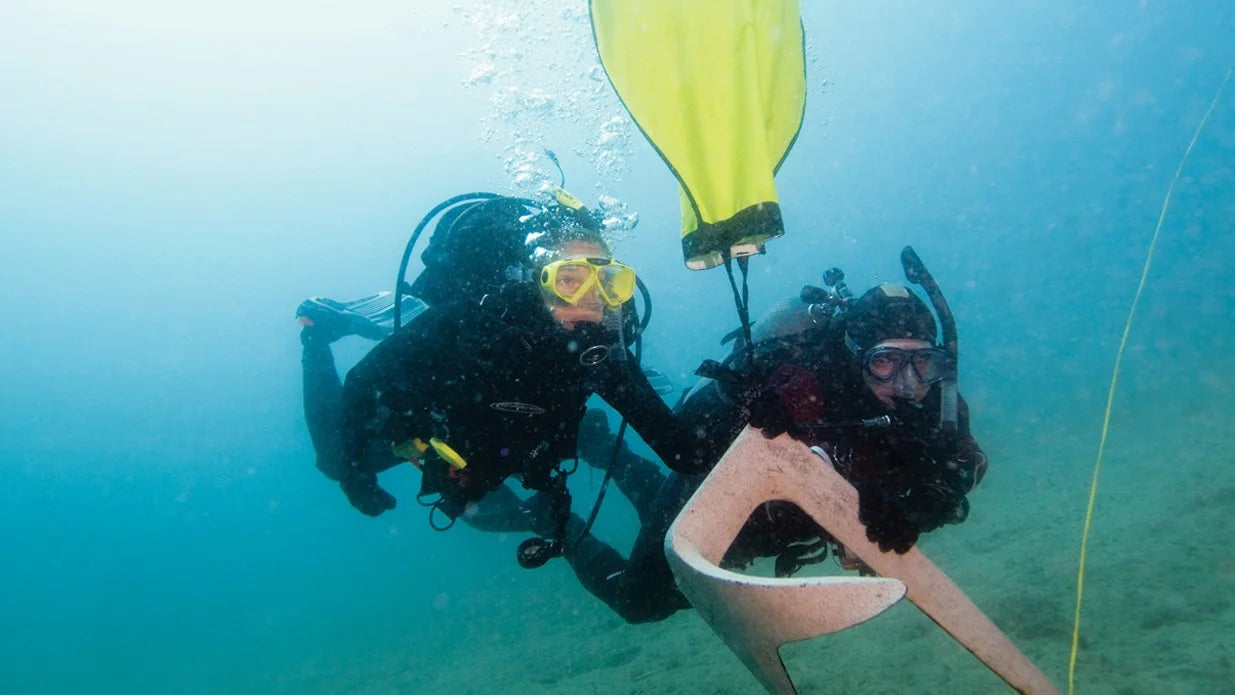
The third dive introduces practical recovery procedures using appropriate equipment.
Lift Bag Fundamentals
Students learn:
-
Different types of lift bags
-
Appropriate lift bag selection
-
Understanding lift capacity
-
Inspecting lift equipment
-
Securing suitable objects
-
Managing buoyancy during recovery
-
Preventing uncontrolled ascents
-
Maintaining safe positioning during lifting operations
Recovery Procedures
Training includes:
-
Assessing an object's suitability for recovery
-
Identifying safe attachment points
-
Preparing recovery equipment
-
Managing lift bag inflation
-
Maintaining appropriate distance from suspended loads
-
Monitoring the lifting process
-
Following instructor-directed recovery procedures
Students practice controlled recovery techniques using suitable training objects.
Important: Lift bags and recovery equipment can create serious hazards when used incorrectly. Students must follow instructor supervision and applicable PADI standards throughout training.
6. Open Water Training Dive Four – Search and Recovery Scenario
The final training dive combines knowledge, navigation, search techniques, teamwork, and recovery procedures into a realistic simulated operation.
Scenario Planning
Students prepare a search and recovery plan that includes:
-
Defining the search objective
-
Assessing the environment
-
Selecting a search pattern
-
Planning gas management
-
Assigning buddy responsibilities
-
Preparing recovery equipment
-
Reviewing safety procedures
Practical Search Operation
Students conduct an organized search for a designated training object.
Training may include:
-
Navigating to the search area
-
Establishing reference points
-
Performing the planned search pattern
-
Locating the training object
-
Assessing recovery options
-
Using appropriate recovery techniques
-
Returning safely to the exit point
Post-Dive Evaluation
Following the scenario, students review:
-
Search effectiveness
-
Navigation accuracy
-
Buddy communication
-
Equipment handling
-
Recovery procedures
-
Safety awareness
-
Opportunities for improvement
The instructor evaluates each student's ability to apply the required skills safely and effectively.
Training Locations & Flexible Scheduling
Toronto – Rui Diving Centre
Rui Diving Centre offers Search and Recovery training in Toronto and surrounding Ontario dive locations.
Knowledge Development
Classroom instruction and search planning workshops at Rui Diving Centre.
Equipment Preparation
Practical workshops covering search lines, navigation equipment, lift bags, and recovery procedures.
Open Water Training
Seasonal training at suitable Ontario dive sites.
Ontario diving environments provide opportunities to develop navigation and search skills under varied visibility and bottom conditions.
Training locations are selected according to environmental conditions, site suitability, and instructor availability.
Tropical Search and Recovery Training
Students may also complete eligible specialty dives during selected international diving trips.
Dominican Republic
Develop underwater navigation, search planning, and recovery skills in suitable warm-water environments.
Mexico
Practice underwater search techniques and recovery procedures at approved training sites.
Other International Destinations
Additional training opportunities may be available during scheduled Rui Diving Centre trips.
All training is subject to instructor availability, local regulations, environmental conditions, and applicable PADI standards.
What Is Included?
The course includes:
-
Required PADI Search and Recovery knowledge development
-
Instructor-led theory and planning workshops
-
Underwater navigation training
-
Search pattern development
-
Four required open water specialty dives
-
Lift bag and recovery technique instruction
-
Search and recovery scenario training
-
Use of designated instructional search and recovery equipment during scheduled training
-
Instructor coaching and skill evaluation
-
PADI Search and Recovery Diver Specialty certification processing upon successful completion
Required learning materials are provided according to the selected course package.
What Is Not Included?
Unless specifically stated in writing, the following are not included:
-
Personal scuba diving equipment
-
Scuba equipment rental
-
Diving cylinders and gas fills
-
Weights and weight system rental
-
Boat diving fees
-
Transportation
-
Flights
-
Accommodation
-
Meals and personal expenses
-
Travel insurance
-
Additional training dives
-
Personal search and recovery equipment purchases
-
Recovery of actual lost property outside the scheduled course
-
Commercial recovery services
Students should contact Rui Diving Centre before registration to confirm equipment requirements and training arrangements.
Equipment Requirements
Students must have access to appropriate scuba diving equipment.
Personal Scuba Equipment
-
Mask
-
Snorkel
-
Fins
-
Appropriate exposure protection
-
BCD
-
Regulator system
-
Dive computer
-
Appropriate weight system
-
Compass
-
Surface signaling equipment
Search and Recovery Equipment
Training equipment may include:
-
Underwater search lines
-
Reels or spools
-
Lift bags
-
Surface markers
-
Appropriate attachment hardware
-
Designated training objects
Specialized instructional equipment will be arranged according to the scheduled training activities.
Certification & Continuing Education
After successfully completing the required knowledge development, four open water training dives, and all applicable performance requirements, students may qualify for the PADI Search and Recovery Diver Specialty certification.
This certification recognizes training in recreational underwater search planning, navigation, search patterns, and recovery techniques.
Continue Your Diving Education
Search and Recovery training complements other PADI courses, including:
-
PADI Advanced Open Water Diver
-
PADI Underwater Navigator
-
PADI Peak Performance Buoyancy
-
PADI Rescue Diver
-
PADI Wreck Diver
-
PADI Deep Diver
-
PADI Divemaster
The PADI Search and Recovery Diver Specialty may also count toward the specialty certification requirements for the PADI Master Scuba Diver rating.
This recreational specialty does not qualify divers to conduct commercial salvage, public safety recovery, hazardous-material recovery, or technical lifting operations.
Course Policies & Important Information
1. Course Validity
Students have one year from the original registration date to complete the purchased course, subject to Rui Diving Centre's published course policies.
2. Registration & Payment
Registration is confirmed after payment and completion of the required documentation.
Course payments are non-refundable, non-transferable, and non-exchangeable, subject to applicable law and Rui Diving Centre's official policies.
3. Medical Requirements
Students must complete the required diving medical questionnaire before participating in practical training.
Medical clearance may be required depending on individual circumstances.
4. Scheduling & Rescheduling
Training schedules depend on instructor availability, equipment access, and suitable diving conditions.
Rescheduling due to documented medical reasons or training cancellations caused by unsafe conditions may be accommodated without a rescheduling fee.
Other student-requested schedule changes made less than 48 hours before a confirmed session are subject to a $99 + HST rescheduling fee.
5. Performance Requirements
Certification is not guaranteed by course payment or attendance.
Students must demonstrate all required knowledge, navigation, search, recovery, and safety skills before certification can be issued.
6. Additional Training
Students who require additional training or repeated evaluations may need to arrange additional sessions.
Additional training fees may apply.
7. Equipment Responsibility
Students are responsible for properly preparing, maintaining, and handling their personal diving equipment.
All recovery equipment must be suitable for the planned training activities and operated according to instructor guidance.
8. Recovery Safety & Limitations
Students must not attempt to recover objects that exceed their training, equipment capabilities, or safe diving limits.
Recovery operations involving hazardous materials, unstable objects, heavy loads, restricted areas, or commercial salvage activities are outside the scope of this recreational specialty.
9. Lost Property & Legal Considerations
Completion of the course does not authorize students to remove objects from protected sites, shipwrecks, archaeological locations, or private property without appropriate permission.
All recovery activities must comply with applicable laws and local regulations.
10. Tropical Training
International training opportunities depend on scheduled trips, instructor availability, local conditions, and suitable training sites.
Travel-related expenses are not included unless specifically stated.
11. Official Course Policies
All registrations are subject to Rui Diving Centre's official terms, conditions, and training policies published at www.ruidiving.com.
In the event of any discrepancy, the official published policies and applicable laws will prevail.
Develop the Skills to Search, Locate & Recover
Underwater search and recovery is a combination of planning, navigation, teamwork, problem-solving, and specialized diving techniques.
Whether you want to improve your diving abilities, learn to locate lost objects, or prepare for more advanced diving education, the PADI Search and Recovery Diver Specialty Course provides practical skills that can make every dive more rewarding.
Plan the Search. Find the Target. Recover Safely.
Contact Rui Diving Centre
Rui Diving Centre – Toronto, Canada
Website: www.ruidiving.com
Email: diving@ruidiving.com
Languages: English & Mandarin
Training Locations: Toronto, Ontario & Selected Tropical Destinations
Contact us to arrange your PADI Search and Recovery Diver Specialty training.